▼Highlights of This Case Study
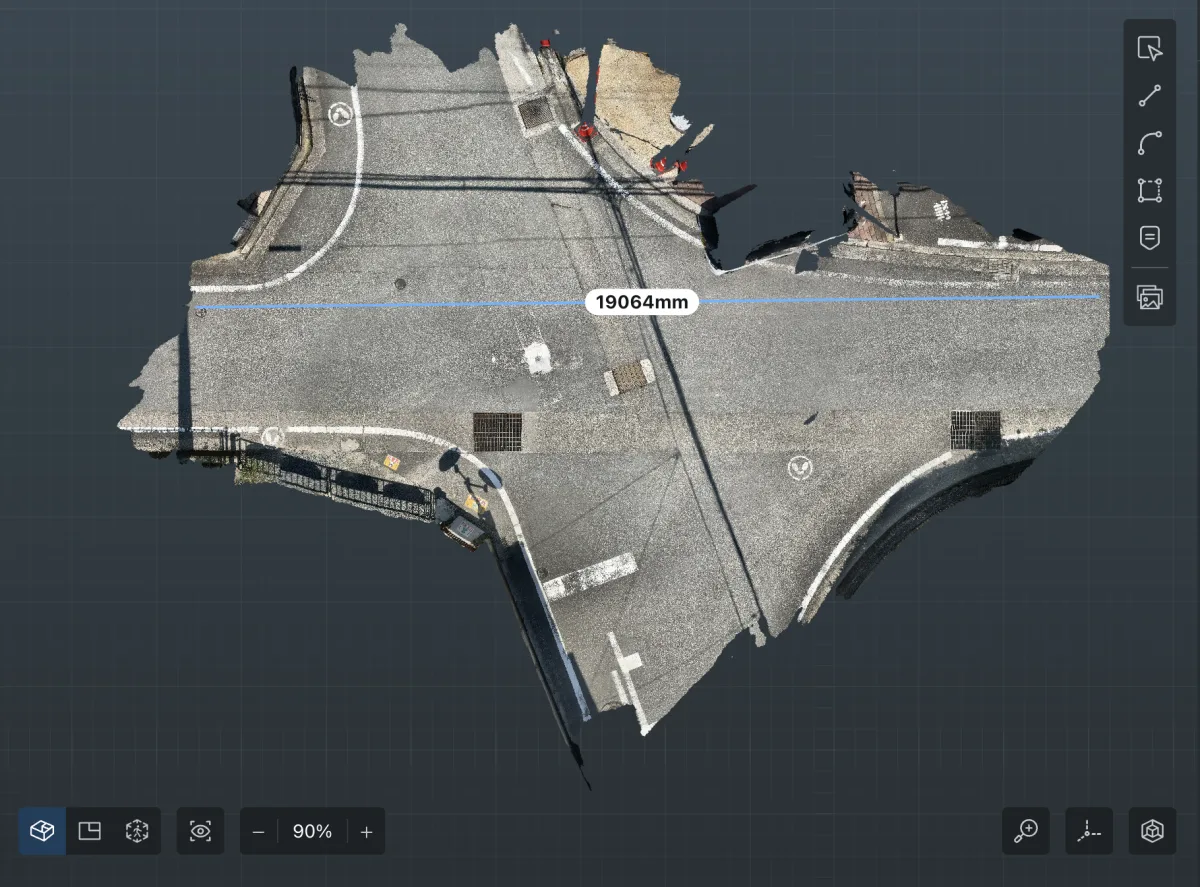
Implementation: Aiming for a workflow that “can be completed in a single on-site survey,”Scanat we digitized the site using 3D data.
Results: On-site work can now be handled by a single person, eliminating the need for return visits and reducing total response time by up to approximately 80%.
\Shikoku Road is using it too!/
Conducting on-site surveys “all by yourself with just a smartphone”Scanat
About Shikoku Road Co., Ltd.
♦︎Front-line operations supporting infrastructure with limited staff
Shikoku Road Co., Ltd. is a company engaged in the maintenance and repair of roads and related infrastructure.
Amid a growing labor shortage, the company faces the challenge of efficiently managing its operations with a limited workforce.
ScanatChallenges Before Implementation
♦︎On-site operations that relied heavily on manpower and time, resulting in “frequent return visits”
In traditional general road construction projects,
- 2 to 4 people are needed for the on-site survey
- Return visits occurred due to missed measurements or photos
- The commute to the job site is a major burden
- It’s hard to convey the on-site conditions using only drawings and photos.
With challenges like these, it had become a “workplace that couldn’t function without people.”
ScanatHow We Discovered It and Why We Adopted It
♦︎ We want to create a “workplace that can be run by a small team”
In this situation, the two biggest challenges were the “high frequency of return visits” and “time constraints at the site.”
While field surveys must be conducted within a limited timeframe, any missed measurements or photographs meant that
we had to return to the site, which resulted in a significant increase in travel time and personnel costs.
In response to this inefficient operational structure,
“We want to create a system that allows us to gather all the necessary information during a single on-site survey and complete the subsequent processes,”
based on this idea,Scanat we implemented [the system].
- Allows you to capture on-site data in a single pass
- You can measure and check the results at your convenience later
- You can build business workflows that do not require follow-up visits
This aspect was recognized as a means of enabling operations with a small staff.
Benefits of Implementation
♦︎On-site verification tasks that used to require 2 to 4 people are now being handled by a single person
[On-site Verification]
Before implementation: Took 1–2 hours and required 2–4 people.
After implementation: Time reduced to as little as 30 minutes, and can now be handled by just one person. No repeat visits.
[Quotation Preparation and Construction]
Before implementation: Preparing quotations took time because it was difficult to grasp the site conditions, and explanations and adjustments also required additional effort.
During construction, explanations based on drawings and photos made it time-consuming to share a common understanding of the project.
After implementation: 3D data made it possible to assess the situation without having to return to the site.
Sharing a common understanding with subcontractors and workers became smoother, and construction preparations were completed in a shorter amount of time.
[Total Time for On-Site Inspections , Including Travel]
Before implementation: Approximately 12–24 hours
After implementation: Approximately 5–6 hours
→ This resulted in a reduction of on-site inspections by more than 50% and a reduction in total time by up to approximately 80%.
Future Outlook
♦︎ Transition to a “Workplace That Doesn’t Rely on Individuals”
ScanatThe introduction of this system has enabled us to transition from “workplaces that rely on a large number of staff” to “workplaces that can operate smoothly even with a small number of employees.”
Going forward, we will expand its use to more workplaces and build an operational structure that can function stably even in an era of labor shortages.
\Shikoku Road is using it too!/
Conducting on-site surveys “all by yourself with just a smartphone”Scanat