Architectural Design Education Using Scanat: An Attempt at Environmental Simulation Based on Field Measurement Data
The Maeno Laboratory in the Department of Architecture at the Graduate School of Engineering, The University of Tokyo, is developing environmental architecture technologies and design methods by experimenting with various cutting-edge technologies to explore "how homes can provide comfortable and fulfilling living environments for everyone." For their recent project utilizing 3D scanning technology, Scanat to conduct environmental simulations based on actual measurement data.
Scanat and Its Application to Studio Projects As part of the 2024 academic year studio project, students were tasked with a comprehensive process in which they used Scanat to survey existing buildings, constructed 3D models based on that data, and conducted environmental simulations.
Specifically, the students scanned existing residential buildings Scanat and created 3D models using the point cloud data. These models were then used to conduct environmental simulations regarding solar exposure, natural lighting, and thermal conditions, which served as input for design considerations.
This initiative involves a seamless, end-to-end process — Scanat homes to tracing, modeling in 3D CAD (Rhinoceros), and environmental simulation—and has proven to be a highly valuable experience for the students. Furthermore, this initiative was shared at the Environmental Workshop, a study group for professionals in residential design.
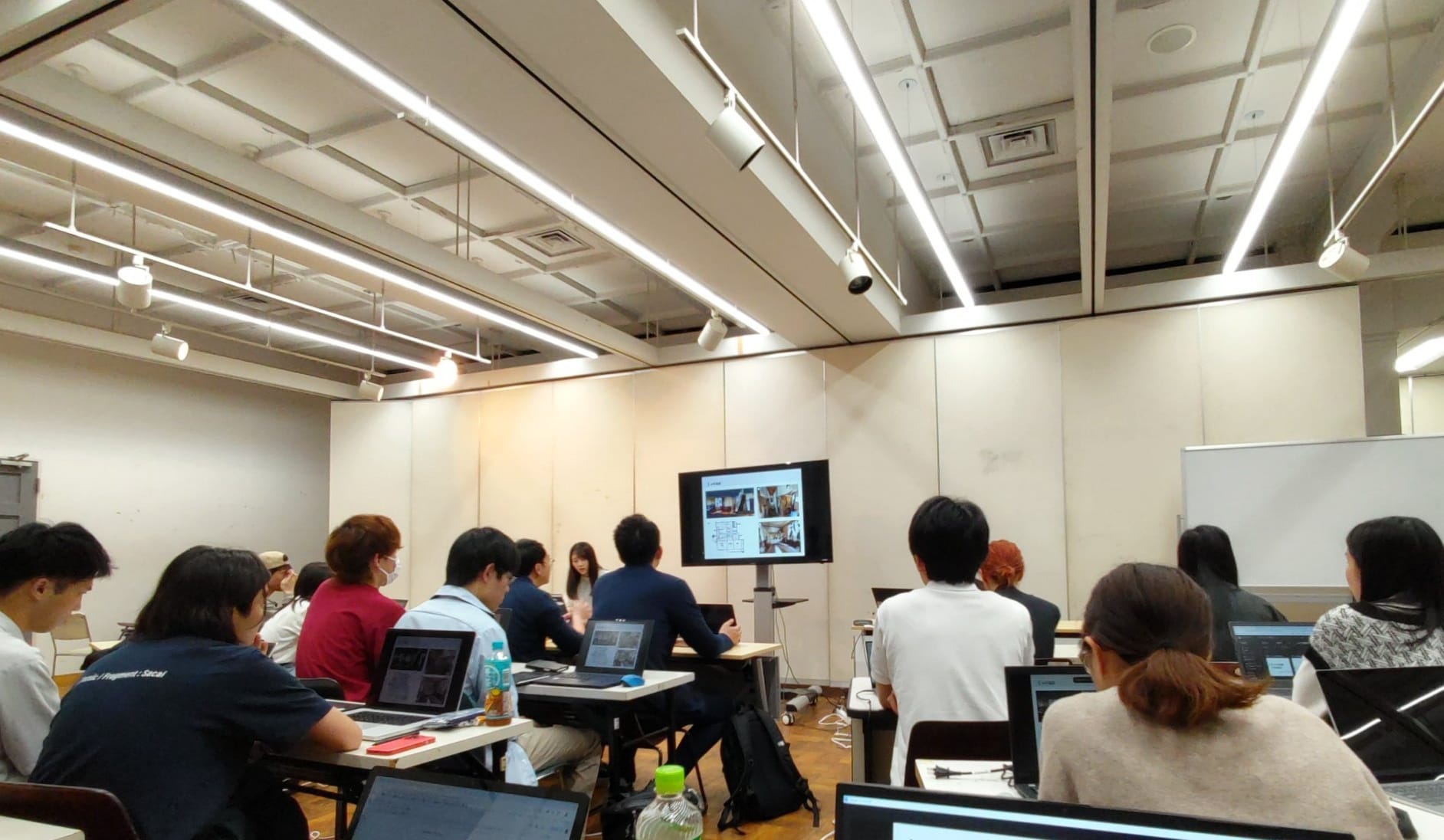
Case Study of Environmental Simulation for the Koide Residence During the mid-term review of the studio project, a student’s (Yurika Tagomi) project focusing on the Koide Residence (built in 1925, designed by Saki Horiguchi) was presented as a concrete example.
Based on data measured Scanat, Mr. Tagami used Rhinoceros to create a 3D model of the Koide Residence and conducted the following environmental simulations:
Based on these simulation results, future areas for consideration include refining the model (particularly to accurately reproduce ceiling heights) and tightening simulation parameters.Additionally, the following design objectives were identified: reducing glare through large south-facing openings, modifying the interior finishes, redesigning the window areas, improving the thermal environment using CFD, considering landscaping, and updating the floor plan to a more contemporary layout. Furthermore, a specific question was raised regarding the appropriate method for reproducing shoji screens in ClimateStudio.
Scanat, students can easily obtain detailed 3D data of existing buildings and perform highly accurate environmental simulations based on that data. This provides opportunities for more practical and in-depth learning that would have been difficult to achieve using traditional drawings or manual measurements.
This initiative at the University of Tokyo is exploring the use Scanat not only for studio projects but also for pre-renovation Scanat of existing homes and buildings; the university recognizes the need for a web-based version to facilitate data sharing and floor plan creation. Scanat pilot program for architectural design education Scanat suggests the potential for a new educational approach—one that involves evaluating environmental performance based on actual measurement data and incorporating that feedback into the design process—and its future developments are eagerly anticipated.