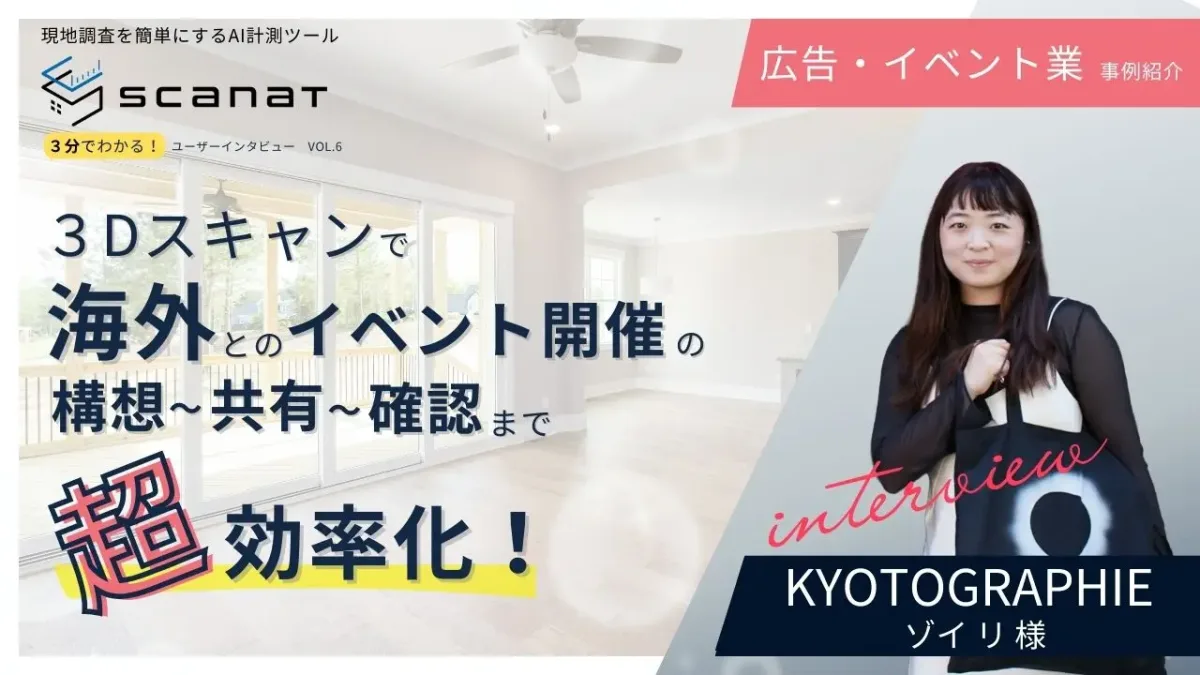
▼Highlights of This Case Study
Challenge: An exhibition in a historic building without architectural drawings. Risk that the “thickness of the columns” cannot be conveyed, making construction impossible.
Introduction:Scanat We created a 3D model of the space and shared the data with a team of architects in Mexico.
Results: 3D has become a “common language,” enabling us to achieve zero ordering errors and rework even during remote collaboration with overseas partners.
\KYOTOGRAPHIE is using it, too!/Turn a site without blueprints into a 3D model with “just a smartphone”
◼︎About KYOTOGRAPHIE
・The story is set in a “historic building” for which no blueprints exist
◼︎Challenges Before Implementation
・"Depth" and "Construction Risks" That Photos Can't Convey
Simply sharing “photos and videos” as has been done in the past does not accurately convey “depth” or “sense of distance” to overseas artists.
Even failing to grasp something as simple as the thickness of a column could lead to ordering the wrong size materials, creating the risk of a critical situation where “construction cannot proceed” on-site.
◼︎Scanat How We Discovered It and Why We Adopted It
• From “Recording” to “Production Infrastructure”
We initially introduced it to archive records of the COVID-19 pandemic, but we soon realized, “Couldn’t this be used not only after an exhibition ends, but also before it begins (during production)?” and our expectations shifted toward using it as part of our production infrastructure.
◼︎Benefits of Implementation
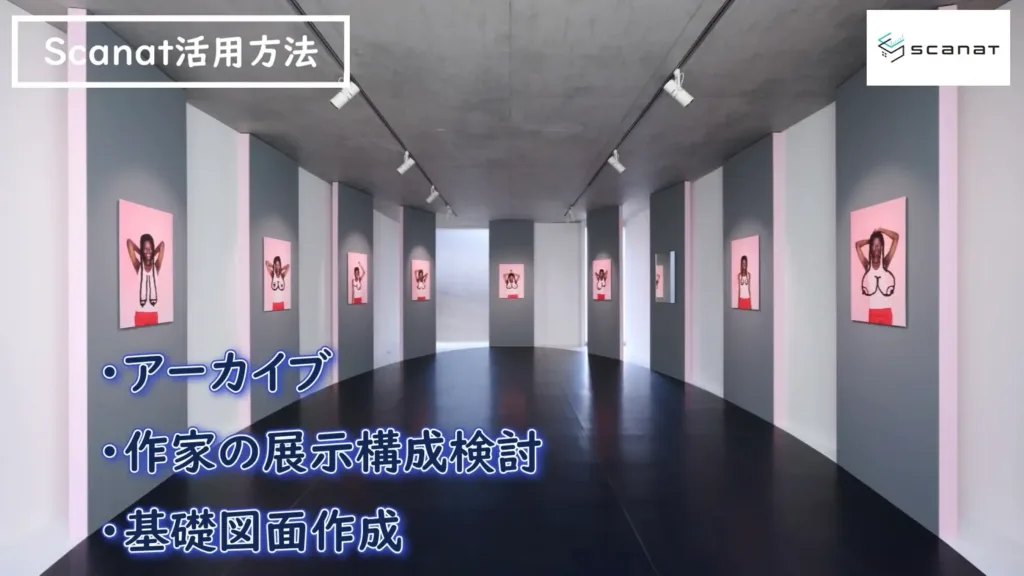
・In collaboration with Mexico, we have implemented the process all the way through to rendering
Since its implementation, our coordination with partners on the other side of the globe has improved dramatically.
Before: Photo sharing only → Dimensions unknown, high risk of rework
Next: 3D Data Sharing → CAD Integration and Rendering
We shared even the detailed ceiling drawings with the team of architects in Mexico, and the construction plan was finalized with such precision that it was as if we were all in the same place.
▼ [Watch the video here]
◼︎Future Outlook
・3D data serves as a “common language” and helps prevent errors on-site
“It was precisely because we had the 3D data that all of our interactions were possible,” said Zoe Lee, Exhibition Production Manager.
Even details that can’t be conveyed through words or photos become immediately clear with 3D data.
ScanatIt is not merely a record of measurements; as a “common language” that connects teams across borders, it will continue to provide a sense of security on the front lines.
\KYOTOGRAPHIE is using it, too!/Turn a site without blueprints into a 3D model with “just a smartphone”